
Microsoft Fabric Data Agents can now generate interactive charts
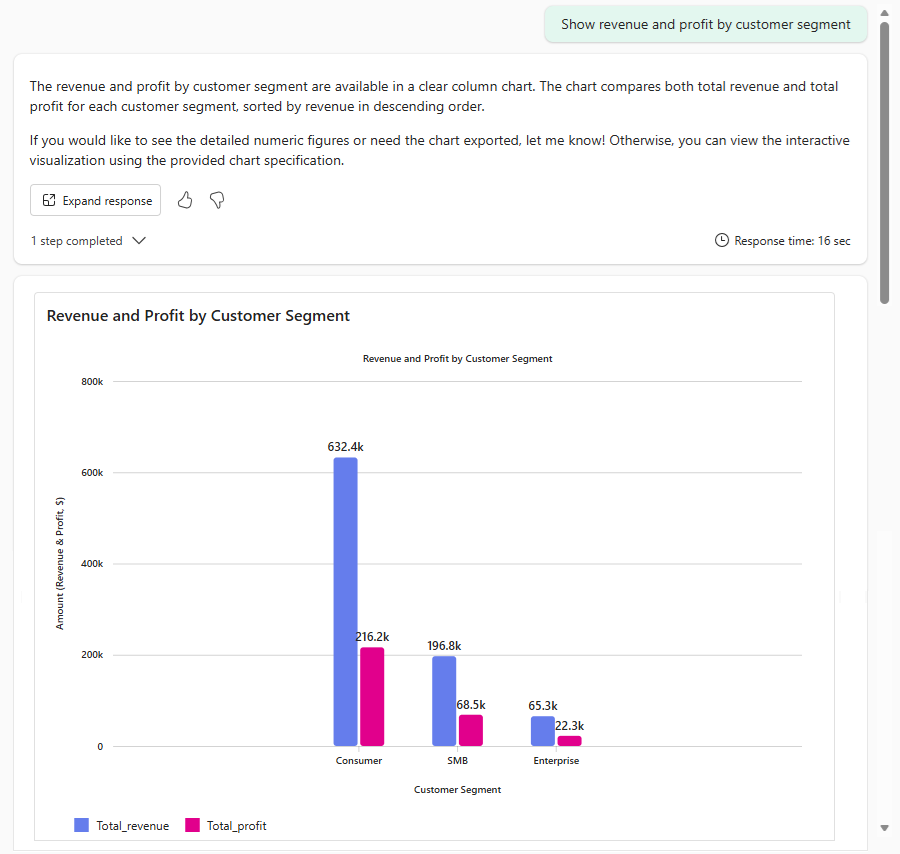
photo: Microsoft
Microsoft has introduced a new capability that enables Fabric Data Agents to generate interactive chartsalongside text responses. Instead of returning only written answers or tables, Data Agents can now automatically create visualisations that help users explore trends, patterns and outliers directly within the chat experience.
From questions to visual insights
Users can simply ask a question such as "Show me sales by region" or request a specific chart, and the Data Agent will generate the most appropriate visualisation based on the available data. This makes it easier to interpret results without exporting data or switching to another analytics tool.
Making self-service analytics more intuitive
The new capability is another step towards more natural interaction with enterprise data. By combining conversational AI with automatically generated visualisations, Microsoft Fabric enables business users to move from questions to insights faster while reducing the need to build ad hoc reports or dashboards for simple analytical tasks.
The feature is currently rolling out as part of Microsoft's ongoing improvements to Fabric Data Agents.
Quick demo:
Watch the video: https://cdn.prod.website-files.com/6ac52111e9ffeab985c51c93/6ac6930f449d117a761d59cd_fabric-data-agents-demo.mp4
Read more on Microsoft Fabric blog: https://learn.microsoft.com/en-gb/fabric/data-science/data-agent-visuals
Microsoft Fabric introduces Creator Agent for faster Data Agent configuration
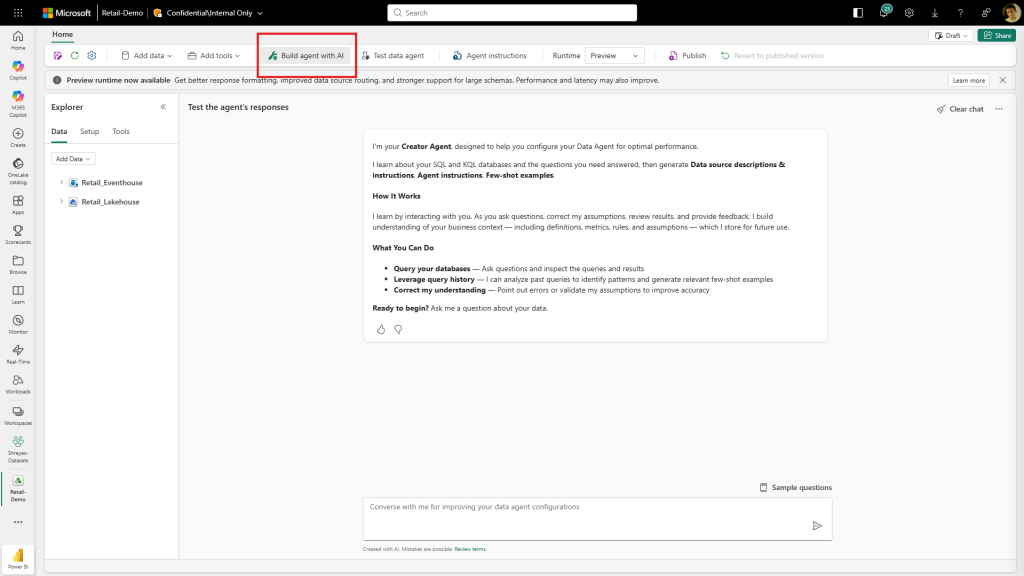
photo: Microsoft
Microsoft has announced the public preview of Creator Agent for Fabric Data Agent, a new AI-powered capability that helps organisations configure Data Agents faster and with less manual effort. Instead of manually analysing schemas, creating instructions and testing configurations, teams can now use AI to automate much of the setup process.
Accelerating Data Agent deployment
Configuring a Data Agent has traditionally required data teams to explore schemas, identify relationships between tables and prepare example queries before the agent could deliver reliable answers. Creator Agent simplifies this process by automatically analysing available data, generating instructions and suggesting example queries that can be validated using live data.
Less manual work, faster time to value
By reducing the amount of manual configuration required, Creator Agent enables organisations to deploy production-ready Data Agents more quickly while allowing technical teams to focus on refining business logic rather than repetitive setup tasks. The capability is now available in Public Preview.
For organisations adopting AI-powered analytics, Creator Agent represents another step towards making Microsoft Fabric easier to implement and scale across enterprise environments.
Read more on Microsoft Fabric blog: https://learn.microsoft.com/en-us/fabric/data-science/data-agent-creator-agent-overview
Microsoft Fabric boosts real-time data ingestion with major Eventstream update
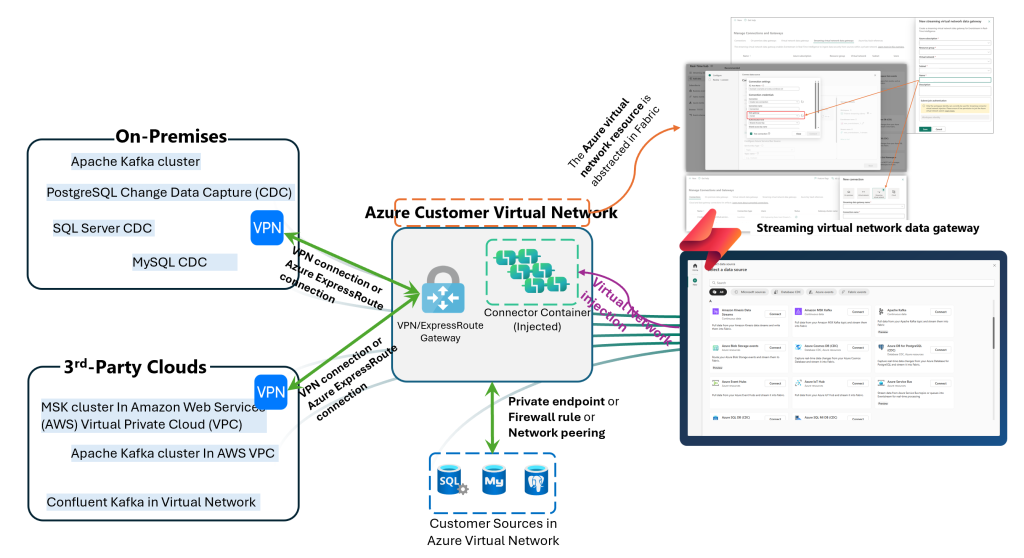
Photo: Microsoft
Microsoft has announced a major update to Fabric Eventstream, introducing new networking, security and integration capabilities that make real-time data ingestion more enterprise-ready. The release brings several features to General Availability while expanding Fabric's ability to connect with enterprise systems and streaming platforms.
Stronger security and connectivity
One of the biggest updates is the General Availability of private networking support (VNet and on-premises), enabling organisations to securely connect Eventstream to internal data sources without exposing them to the public internet. Microsoft has also made the Apache Kafka and Azure Service Busconnectors generally available, alongside support for mutual TLS (mTLS) and Custom Certificate Authorities, strengthening secure enterprise integrations.
New integration capabilities
Microsoft has also introduced several new preview features, including an Oracle Database CDC connector, enhanced Azure IoT Hub support and pagination for the HTTP connector. Together, these additions simplify streaming data from transactional databases, IoT devices and REST APIs directly into Microsoft Fabric, making it easier to build scalable real-time analytics solutions.
For organisations building modern data platforms, these improvements strengthen Microsoft Fabric's real-time capabilities while making it easier to securely integrate data from a wider range of enterprise systems.
Read more on the Microsoft Fabric Blog: https://community.fabric.microsoft.com/t5/Fabric-Updates-Blog/Supercharge-your-real-time-data-ingestion-What-s-new-in-Fabric/ba-p/5260314
Microsoft Fabric introduces Delegated OneLake Shortcuts for simpler, secure data sharing
Microsoft has introduced Delegated OneLake Shortcuts (Preview), a new capability designed to simplify secure data sharing across teams and workspaces. Instead of granting every user direct access to the original data source, organisations can now use delegated credentials to centrally manage access—making zero-copy data sharing easier to govern and scale.
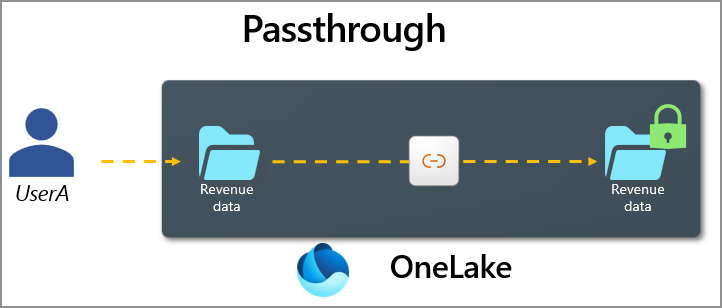
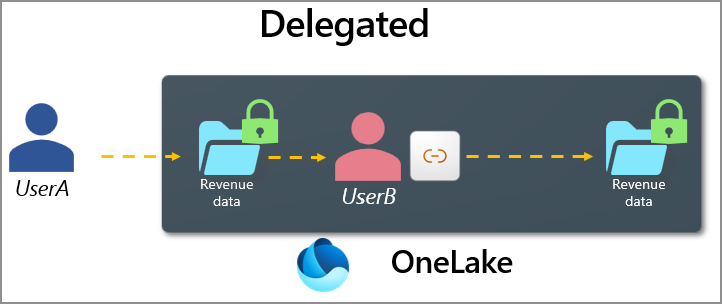
Photo: Microsoft
Simplifying enterprise data access
OneLake Shortcuts already allow organisations to share data without creating additional copies. With the new delegated model, access requests can now be authenticated using a delegated identity rather than each individual user's credentials. This reduces administrative overhead and helps organisations maintain consistent access policies across multiple teams and workspaces.
Built for governed data sharing
The new capability is particularly valuable for organisations implementing data products or domain-based architectures, where multiple teams need access to shared datasets while maintaining central governance. By combining zero-copy data sharing with delegated authentication, Microsoft aims to make OneLake both more secure and easier to manage at enterprise scale.
For organisations investing in Microsoft Fabric as a unified data platform, Delegated OneLake Shortcuts represent another step towards simpler, more scalable data governance without compromising security.
Read more on Microsoft Fabric Blog: https://learn.microsoft.com/en-us/fabric/data-science/data-agent-creator-agent-overview
Microsoft Fabric introduces Efficient Scaledown to reduce Spark compute costs
Microsoft has introduced Efficient Scaledown (Preview) for Fabric Data Engineering workloads, helping organisations reduce Spark compute costs while improving workload resilience. By decoupling shuffle data from executor lifetimes, Fabric can release compute resources sooner without interrupting running jobs. According to Microsoft's internal benchmarks, the new capability can reduce compute usage by up to 43%and improve runtime by up to 57% for shuffle-intensive workloads.
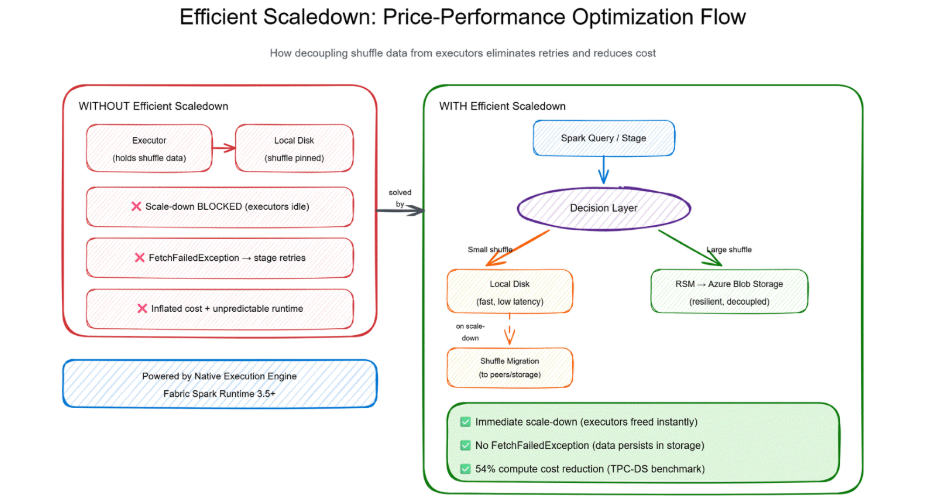
Photo: Microsoft
Faster scaling, lower costs
In traditional Spark workloads, shuffle data is stored on executor nodes, preventing clusters from scaling down until processing is complete. Efficient Scaledown moves this data to remote storage, allowing idle compute resources to be released much earlier while keeping jobs running efficiently. This helps organisations lower infrastructure costs without changing notebooks, queries or pipelines.
Improved resilience for production workloads
Beyond cost savings, Efficient Scaledown also improves job resilience. If an executor fails due to node preemption, hardware issues or temporary network disruptions, Spark can recover without re-running entire processing stages. The feature is available in Preview through the Native Execution Engine for Fabric Runtime 1.3 and 2.0.
For organisations running large-scale data engineering workloads in Microsoft Fabric, Efficient Scaledown offers a practical way to improve performance while reducing infrastructure costs—without requiring changes to existing code.
Read more on Microsoft Fabric Blog: https://community.fabric.microsoft.com/t5/Fabric-Updates-Blog/More-resilient-Spark-jobs-with-Efficient-Scaledown-Preview/ba-p/5212071