
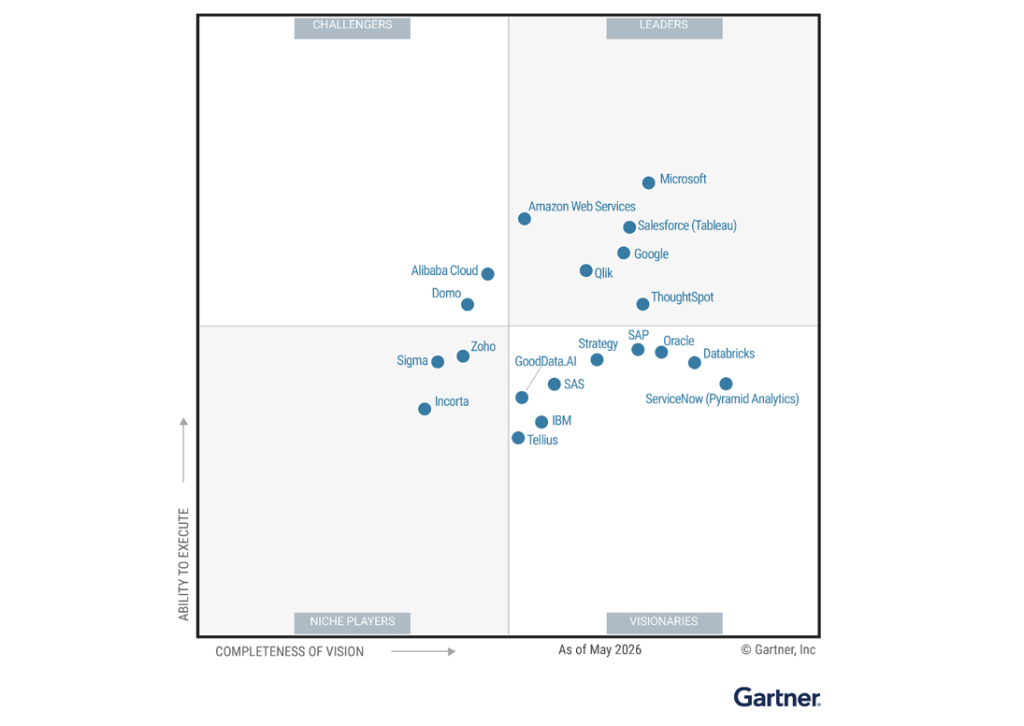
Microsoft has positioned its data platform as a Leader in the 2026 Gartner Magic Quadrant for Analytics and BI Platforms for the 19th consecutive year, marking a strategic pivot in how enterprise intelligence is delivered. By embedding Power BI deeply within the unified Microsoft Fabric architecture, the platform transitions traditional BI from isolated dashboards into an interconnected data estate. The release of Fabric IQ and enhanced semantic layertools ensures that enterprise business logic now acts as the single source of truth for both human analysts and autonomous AI agents.
Semantic models become the groundwork for AI
Microsoft is shifting the role of Power BI semantic models from simple reporting definitions into an open-format foundation for enterprise-wide AI. With over 20 million models active, the introduction of Fabric IQ allows Microsoft 365 Copilot, custom applications, and third-party tools to reason over established business metrics directly. Furthermore, new capabilities like agent skills for Power BI, Tabular Model Definition Language (TMDL) views, and Rayfinenable developers and AI agents to build or interact with governed datasets programmatically without bypassing corporate logic.
Guardrails for conversational analytics
For Chief Data Officers, Data Architects, and BI Managers, this architectural shift solves a major problem in conversational analytics: AI hallucination over raw numbers. By forcing AI experiences and Microsoft 365 Copilot Cowork to query data through the semantic layer, organizations ensure that definitions for complex metrics like "revenue" or "margin" remain consistent. This eliminates the risk of AI platforms misinterpreting unaggregated tables or creatingcompeting definitions on the fly, allowing Data Engineering and Governance teams to maintain strict control over data compliance and security.
Business and architectural impact
For mid-market and enterprise organizations operating in regional and global markets, this update fundamentally changes the ROI of data governance. Instead of rebuilding business logic for every new AI pilot, IT leadership canleverage existing Power BI assets to ground organizational knowledge. Operating under a single Fabric capacity pricing model simplifies cost optimization, making it highly scalable as teams transition from static dashboards to agentic workflows. Organizations looking to operationalize these capabilities can explore technical implementation strategies by watching the Microsoft Build session "Build Agentic Analytics with Power BI and Microsoft Fabric" orreviewing the full Gartner Magic Quadrant report to benchmark their data strategy against current market standards.
Read more on Power BI Updates blog: https://community.fabric.microsoft.com/t5/Power-BI-Updates-Blog/Microsoft-named-a-Leader-in-the-2026-Gartner-Magic-Quadrant-for/ba-p/5262403
Microsoft Fabric gives organisations greater control over runtime upgrades
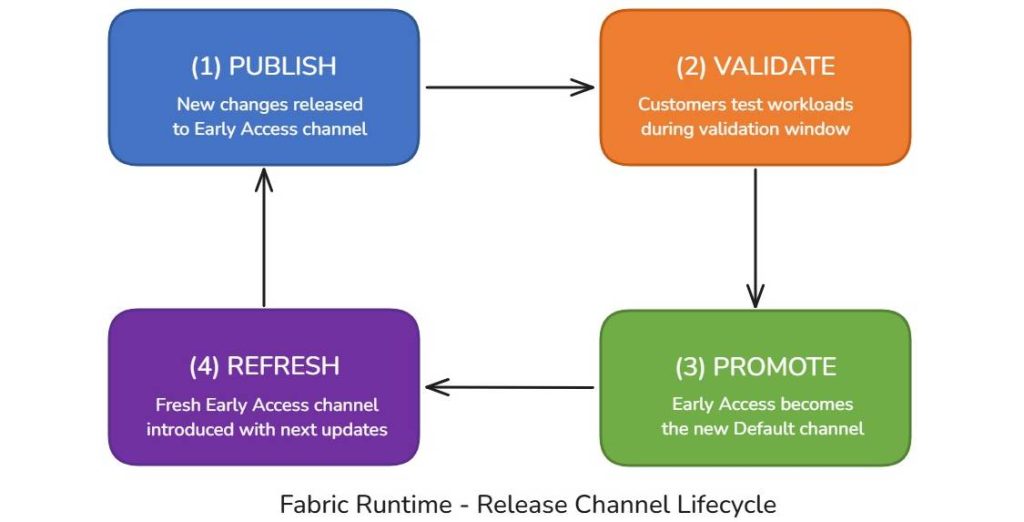
Microsoft Fabric has introduced Fabric Runtime Release Channels, giving enterprise data teams greater control and predictability over how Apache Spark upgrades are rolled out. Traditionally, cloud platforms push "silent" runtimeupdates that, while securing the platform, risk breaking production data pipelines due to under-the-hood dependency changes. This new capability splits the runtime into two distinct tracks: a standard Default Channel and an opt-in Early Access Channel, allowing data platform teams to rigorously test workloads in sandbox environments before upgrades hit production.
Shifting from reactive fixes to proactive validation
For mid-market and enterprise organisations operating complex data estates, an unexpected Spark upgrade failure can halt critical morning BI reports or disrupt downstream AI models. Fabric Runtime Release Channels eliminatethis unpredictability by providing a formal validation window. The Early Access Channel offers a production-grade preview of the upcoming runtime environment, complete with pending library updates, security patches, and operating system modifications.
When the designated validation window closes, the early access version is automatically promoted to the new default, and a new preview cycle begins. This structured rotation replaces sudden, silent platform updates with a predictable testing lifecycle, giving Lead Data Engineers and Data Platform Managers the visibility required to maintain strict operational SLAs.
Operational realities: custom pools and automated testing
Implementing this feature requires establishing a dedicated test workspace or utilizing existing UAT environments. Within these testing sandboxes, teams create an Environment item configured to the Early Access Channel and link itto representative notebooks or Spark Job Definitions. To isolate issues effectively, engineers can extract the specific Virtual Hard Disk (VHD) ID via the Spark UI configuration to verify exactly which build is running when reportingedge-case bugs to Microsoft support.
However, enterprise architects should note an important infrastructure trade-off: the Early Access Channel currently relies exclusively on custom pools rather than Fabric's instantaneous Starter Pools. This means testing sessionswill experience a slight delay during cold starts. Despite this minor latency, the billing structure remains identical to the default channel, ensuring that rigorous pre-production testing does not introduce additional Azure computeoverhead.
Why corporate organisations should care
This update is a major milestone for governance and risk management within enterprise data platforms. For CIOs and Chief Data Officers driving stability across their enterprises, the business value lies in risk mitigation and costavoidance. Instead of high-pressure, reactive debugging sessions when a production pipeline fails unexpectedly, data teams can automate regression testing on upcoming runtimes. By validating dependencies early and collaborating with Microsoft support ahead of time, organisations can maintain continuous data availability, protect downstream analytics, and ensure platform security patches are adopted smoothly without disrupting dailyoperations.
Learn more in the Microsoft Fabric documentation: https://learn.microsoft.com/en-us/fabric/data-engineering/release-channels
Microsoft Fabric mitigates data exfiltration risks in Real-Time Intelligence with Outbound Access Protection
Microsoft Fabric has introduced Workspace Outbound Access Protection (OAP) in Public Preview for Real-Time Intelligence (RTI) workloads. This update allows enterprise administrators to enforce a default-deny security posture atthe workspace boundary, blocking unauthorized outbound data movement while maintaining internal data flows. For organizations operating under strict compliance frameworks, this bridges a critical gap in safeguarding real-timedata ingestion, analytics, and alerting pipelines from accidental or malicious exfiltration.
Restricting the outbound perimeter for real-time ingestion
Under the new OAP framework, outbound traffic from Real-Time Intelligence items - including Eventstream, Eventhouse, KQL QuerySets, and Activator - is blocked by default unless explicitly permitted by administrator-configuredrules. For Eventstream, this means all cross-workspace destinations and external services or APIs are restricted, keeping data flows contained within the safe boundaries of a single workspace.
Eventhouse workloads receive a balanced security model: while direct connections to unapproved external databases are blocked, native integrations like OneLake access, follower databases, and Azure Event Hubs remainsupported within the workspace. Administrators can also define data connection rules to securely permit cross-workspace access to OneLake and follower databases where business requirements demand it.
The operational impact on automation and Copilot
The introduction of OAP introduces important guardrails for automated workflows and AI-assisted development. Activator, Fabric's real-time alerting and action engine, now restricts outbound notifications. Under OAP, email and Microsoft Teams notifications are strictly limited to your internal tenant, and Power Automate integration is blocked entirely in this preview phase.
Architects should also note that enabling OAP restricts Copilot capabilities across KQL QuerySets, Eventhouse, and Real-Time Dashboards. Because these generative AI tools rely on outbound telemetry to process natural languagequeries, they are disabled in protected workspaces to maintain a strict zero-trust boundary. Core analytical capabilities, standard KQL query authoring, and dashboard visualization remain unaffected for day-to-day users.
Enterprise business and architectural value
For Chief Data Officers and IT Security Managers in highly regulated sectors - such as financial services, healthcare, and utilities - securing real-time telemetry pipelines has historically been an architectural hurdle. Previously, the lack of granular outbound controls meant that real-time data pipelines carried inherent data egress risks.
With Workspace Outbound Access Protection, enterprise security teams can now greenlight the deployment of production-grade Real-Time Intelligence workloads. It provides the governance guardrails necessary to satisfycompliance standards without stalling developer agility, making Fabric a far more viable platform for enterprise-wide event routing and automated monitoring.
Learn more on Microsoft Fabric Updates blog: https://community.fabric.microsoft.com/t5/Fabric-Updates-Blog/Workspace-Outbound-Access-Protection-OAP-for-Real-Time/ba-p/5241179
Guiding the brain: why AI agents need Fabric sensitivity labels for context, not just security
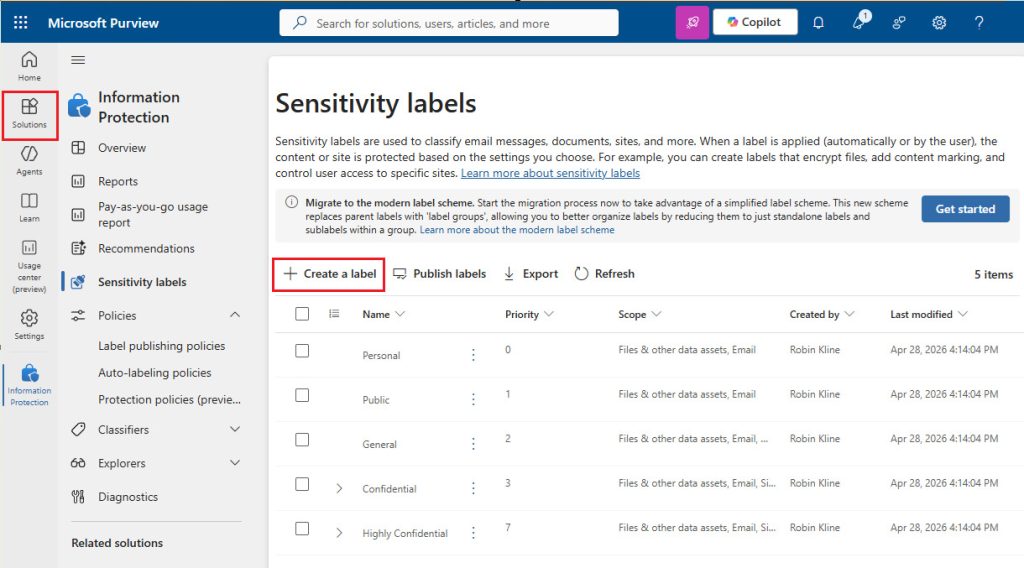
Microsoft Fabric has introduced a capability that allows organizations to use Microsoft Purview sensitivity labels as context-guidance signals for AI agents and skills. Instead of treating these labels purely as access-control gates, Fabric now exposes them via public APIs, enabling AI agents to programmatically read classifications like "General", "Confidential", or "Highly Confidential". This allows AI models to intelligently prioritize, summarize, or restrict data inputs at runtime based on organizational context. The result is a significant leap forward in AI accuracy, reducing the risk of "hallucinated" context blending and ensuring AI behavior aligns with corporate data classificationstandards.
Moving beyond access control to intelligent context filtering
Traditionally, data classification has been a defensive tool used to block unauthorized access. However, when an AI agent or skill is deployed to analyze corporate reports, it often operates with broad read permissions. Withoutexplicit guardrails, the agent treats all accessible data equally. If a user asks a general question, the AI might inadvertently blend public metrics with highly confidential financial forecasts simply because it has access to both.
By utilizing Purview sensitivity labels as programmatic signals, developers can build rule-based logic directly into AI skills. For example, a skill can be instructed to provide full, detailed analysis and charts for "General" data, but restrict its output to high-level, metadata-only summaries for "Confidential" sources. This ensures the AI does not just ask "Am I allowed to see this?" but also "Is this data appropriate to include in this specific conversation?"
Why this matters for enterprise data architects and CDOs
For mid-market and enterprise organizations, this update addresses one of the biggest hurdles in scaling retrieval-augmented generation (RAG) and AI agents: input noise. AI accuracy is entirely dependent on the quality and relevance of the retrieved context. By injecting existing sensitivity labels into the AI decision-making loop, organizations can reuse the governance frameworks they have already spent years establishing.
This programmatic alignment ensures that AI agents respect corporate boundaries naturally, mimicking human decision-making. Lead Data Engineers and BI Managers can now design cleaner, more predictable AI workflows withoutwriting complex, custom security filtering pipelines from scratch. It bridges the gap between data governance and AI engineering, turning passive metadata into active operational guidance.
Business value and next steps for Fabric platform leaders
For Chief Data Officers and IT leaders, the business value of this integration is clear: it reduces the risk of sensitive data exposure while drastically improving the accuracy of AI-driven insights. Before deploying new AI skills acrossFabric, organizations should audit their existing Microsoft Purview labeling strategy. Ensuring that key semantic models, Lakehouses, and reports are consistently labeled is now a prerequisite for accurate AI grounding.
Learn more on Microsoft Fabric Updates blog: https://community.fabric.microsoft.com/t5/Fabric-Updates-Blog/Use-sensitivity-labels-to-improve-AI-Agents-accuracy-and/ba-p/5256054
Microsoft Fabric slashes high-concurrency query latency with GPU-accelerated Data Warehousing
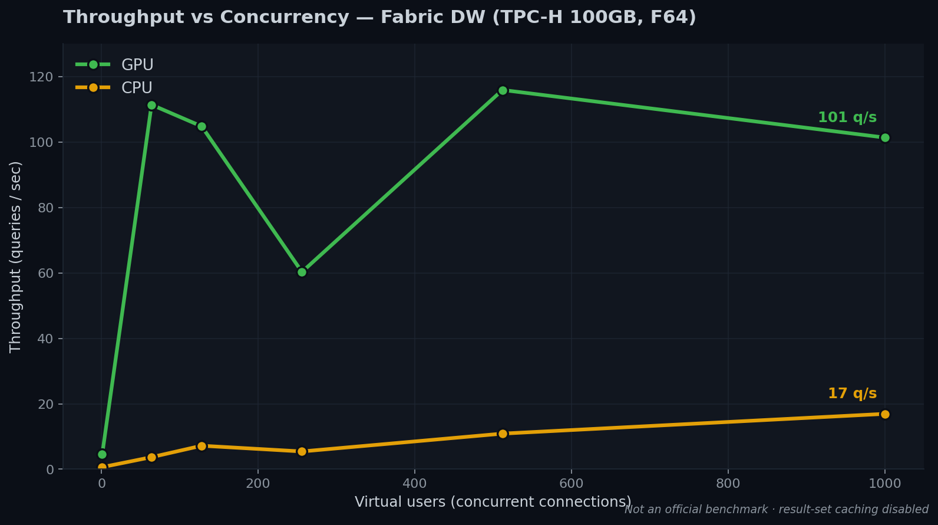
Microsoft Fabric has introduced GPU-accelerated query execution in Public Preview, fundamentally changing how enterprise data warehouses handle massive concurrent workloads. By running custom CUDA kernels directly overraw Parquet data in OneLake, this architectural shift delivers up to 6x the throughput of standard CPU engines under heavy loads. For enterprise leaders, this update promises to eliminate the notorious "Monday morning dashboardslowdown" without forcing organizations to provision massive, expensive compute capacities.
Architectural shift: GPU acceleration directly on OneLake
Traditionally, scaling analytical query performance meant scaling up CPU capacity or duplicating data into proprietary, high-speed caches. Fabric's new GPU acceleration bypasses these trade-offs by processing data directly in OneLake. Because it reads standard Parquet files without requiring data replication, organizations can maintain a single, consolidated data layer.
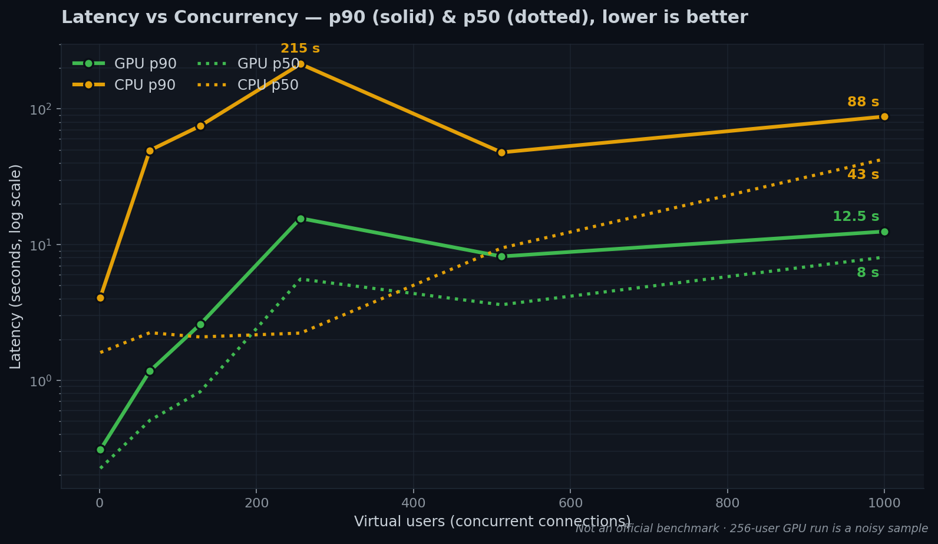
During recent testing on a standard F64 capacity using a 100 GB TPC-H dataset, GPU-accelerated execution kept single-user query times under 500 milliseconds. More importantly, this architecture shines under heavy operationalstress, utilizing custom CUDA kernels developed in partnership with NVIDIA to execute highly parallel analytical queries.
The concurrency game-changer for enterprise dashboards
While single-user performance gains are notable, the true value of this feature lies in high-concurrency environments. When subjected to a simulated load of 1,000 concurrent users, standard CPU execution throughput capped at 17 queries per second (q/s), pushing p95 latency to an unacceptable 97.7 seconds.
Under the exact same load, the GPU-accelerated engine sustained over 101 q/s while holding p95 latency to just 15.1 seconds. This massive leap in concurrent processing capability was validated in a SIGMOD 2026 award-winningpaper, "CoddSpeed: Hardware Accelerated Processing in Microsoft Fabric", proving that hardware acceleration can radically smooth out tail latency when hundreds of users or AI agents query the warehouse simultaneously.
Business value and cost optimization
For Chief Data Officers and IT managers, the business case for GPU-accelerated Data Warehousing is rooted in cost optimization and resource efficiency. To match the GPU's 101 q/s throughput using standard CPU execution, anorganization would theoretically need to scale their capacity from an F64 to an F384 - a massive increase in licensing and operational costs.
By enabling this capability via a simple workspace toggle, Fabric allows enterprises to absorb peak dashboard traffic and AI-driven query spikes efficiently. While lightly used warehouses can comfortably remain on CPU, high-concurrency enterprise environments stand to gain immense performance-per-dollar benefits
Learn more on Microsoft Fabric Updates blog: https://community.fabric.microsoft.com/t5/Fabric-Updates-Blog/We-Put-a-GPU-Behind-Fabric-DW/ba-p/5262382